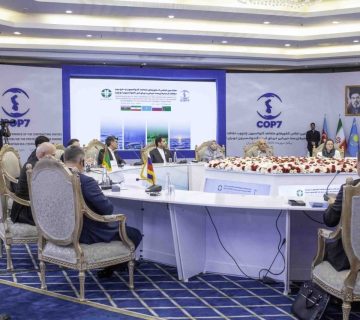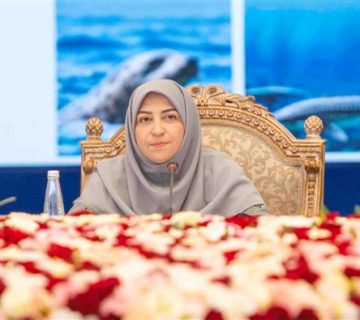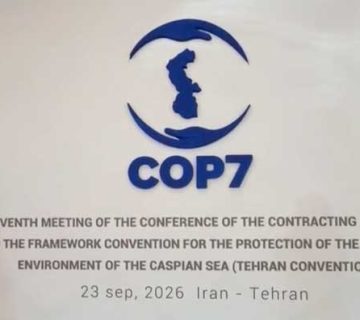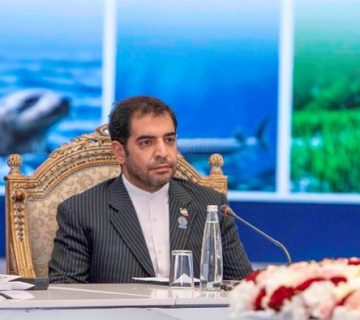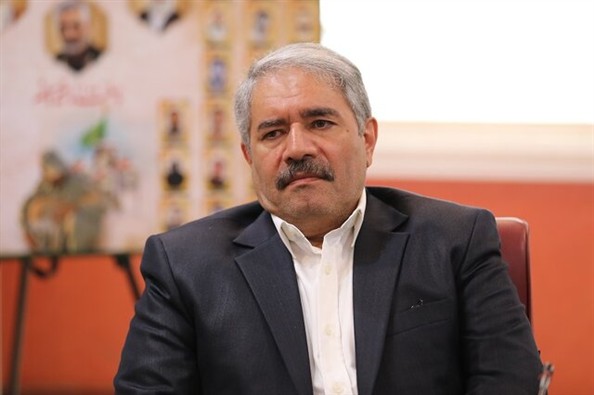
The Deputy for Marine Environment and Wetlands of the Department of Environment (DOE), referring to the holding of the Seventh Conference of the Parties to the Tehran Convention (COP7) hosted by the Islamic Republic of Iran, stated that convening this summit in Tehran presents a significant opportunity to jointly address and follow up on the most critical environmental challenges facing the Caspian Sea, steering littoral states toward science-based, actionable decisions.
According to the Public Relations of the Department of Environment, Ahmadreza Lahijan-zadeh stated: “The Caspian Sea is an ecosystem shared by five littoral states. Many of its processes and transformations—including water level fluctuations, pollutants, habitat conditions, and living resources—are transboundary in nature. Consequently, its sustainable governance demands continuous, synchronized collaboration among all coastal nations.”
He added: “One of the pivotal issues warranting an objective, technical approach today is the declining trend of Caspian Sea water levels and its potential repercussions. Fluctuations in sea levels directly alter the structure and ecological functions of coastal and wetland habitats, carrying far-reaching socio-economic ramifications alongside environmental impacts—including disruption to commercial fishing, tourism, maritime infrastructure, and the livelihoods of coastal communities dependent on the Caspian basin.”
The Deputy for Marine Environment and Wetlands continued: “To proactively confront this trend, we primarily require systematic joint monitoring, uninterrupted exchange of hydrological and ecological data, reinforced scientific research, and advanced predictive modeling. Such measures will allow us to accurately evaluate the dimensions of ongoing shifts and implement sound, coordinated planning.”
Emphasizing the vital importance of Caspian biodiversity, Lahijan-zadeh noted: “Safeguarding flagship and keystone species of this ecosystem, particularly the Caspian seal and sturgeon stocks, necessitates transboundary synergy; the natural ranges, migratory corridors, and anthropogenic threats affecting these species transcend political borders. The Caspian harbors unique biological heritage, vulnerable to pollution pressures, habitat degradation, unsustainable exploitation, and the compounding impacts of climate change.”
He stressed: “In conjunction with biodiversity conservation, the livelihood and well-being of coastal communities must be integrated into overarching policy decisions. Artisanal fishing, eco-tourism, and dependent coastal economic sectors constitute the backbone of local resilience. Environmental conservation policies achieve genuine sustainability only when ecological preservation is harmonized with local socio-economic resilience.”
Highlighting cross-border pollution abatement, the DOE Deputy remarked: “Managing land-based sources of marine pollution, operational and accidental hydrocarbon discharges, and upstream basin-wide activities cannot be accomplished effectively without multilateral littoral cooperation. To this end, full operationalization of the existing protocols and institutional frameworks under the Tehran Convention is essential.”
Lahijan-zadeh continued: “Harnessing the technical expertise and resources of international organizations, academic centers, development finance institutions, and regional collaborative projects will significantly empower littoral nations to deepen their empirical understanding of shifts in the Caspian, securing dedicated technical capacities for habitat protection, red-listed species recovery, pollution mitigation, and climate adaptation strategies.”
He concluded: “By hosting COP7 of the Tehran Convention, the Islamic Republic of Iran is committed to reinforcing this multilateral mechanism as a high-level forum for scientific dialogue and consensus-driven policymaking. We anticipate that the Tehran session will mark a decisive transition from expressions of shared concern toward verifiable, measurable, and binding cooperative action among the five Caspian littoral nations. The future of the Caspian Sea hinges upon our collective decisions today, requiring long-term vision, robust scientific cooperation, transparent data sharing, and international engagement.”