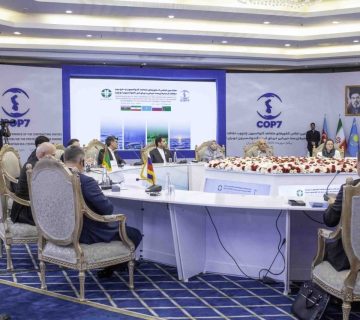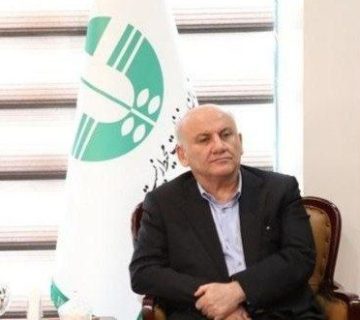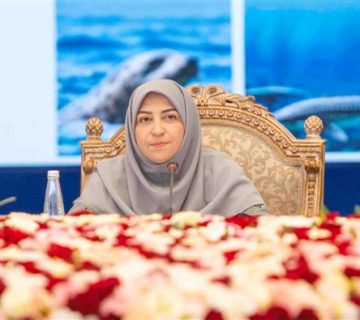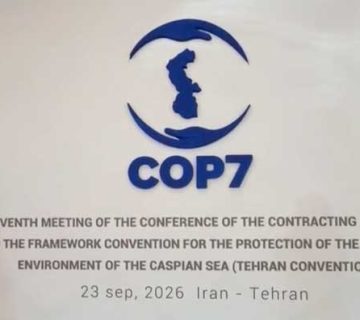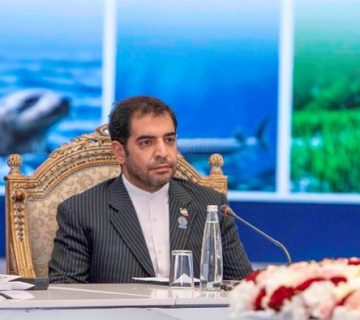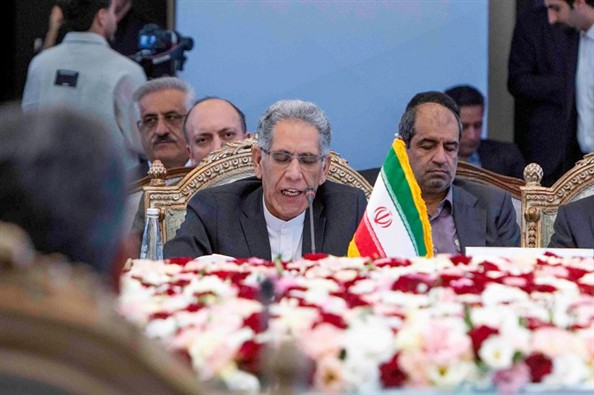
Head of the Caspian Secretariat of the Ministry of Foreign Affairs, at the Seventh Conference of the Parties to the Framework Convention for the Protection of the Marine Environment of the Caspian Sea, stated: Protecting the Caspian environment requires regional cooperation, exchange of scientific data, and joint decision-making by the littoral states.
According to the Public Relations Office of the Department of Environment, Nabiollah Azami, Head of the Caspian Secretariat of the Ministry of Foreign Affairs, at the Seventh Conference of the Parties to the Framework Convention for the Protection of the Marine Environment of the Caspian Sea (Tehran Convention), stated: “It is a pleasure that the Islamic Republic of Iran is hosting the seventh Conference of the Parties to the Tehran Convention. The presence of high-level representatives of the littoral states and relevant institutions in Tehran has provided a valuable opportunity to examine the state of the Caspian environment, assess the trend of past cooperation, and map out the vision for future collaboration.”
He added: “The importance of the Caspian Sea is not limited to its natural resources and economic capacities; rather, the health of this water body is deeply linked to food security, the livelihoods of local communities, sustainable development, the preservation of biodiversity, and the well-being of the current and future generations of the littoral states.”
The Head of the Caspian Secretariat of the Ministry of Foreign Affairs continued: “From this perspective, protecting the Caspian environment is not merely an environmental concern, but a shared necessity and a regional responsibility, the realization of which requires political will, continuous cooperation, and effective participation of all littoral states.”
Expressing gratitude for the cooperation of the delegations of the littoral states during the negotiations on the conference documents, Azami said: “The efforts of the delegations, with empathy and a responsible approach, paved the way for the finalization of the COP7 declaration, and this achievement demonstrates the shared will of the countries to continue cooperation and advance the goals of the Tehran Convention.”
Iran’s concern regarding the consequences of military conflicts for the Caspian
Pointing to the military attacks alleged by the Islamic Republic of Iran, he stated: “On March 18, 2026, Anzali port and the maritime infrastructure of this region were targeted by attacks from the United States and the Israeli regime. Additionally, an Iranian commercial vessel in the Caspian Sea was subjected to a military attack by Ukraine, and one Iranian sailor lost his life.”
The Head of the Caspian Secretariat of the Ministry of Foreign Affairs added: “The Islamic Republic of Iran considers these military actions a violation of its sovereignty and territorial integrity and contrary to the fundamental principles and rules of international law, including the prohibition of the use of force enshrined in the United Nations Charter.”
Azami stated: “What is of particular importance for this session is the potential consequences of such actions for the closed and sensitive ecosystem of the Caspian Sea; consequences that are not limited to national borders, and any threat to the Caspian environment can impact the interests and environment of all littoral states.”
He said: “The Islamic Republic of Iran, while condemning military attacks on ports and coastal infrastructure of the Caspian Sea and vessels, emphasizes the necessity of preventing the spread of disputes and military conflicts to this water body and maintaining it as a safe area for cooperation, peace, and sustainable development.”
Decline in Caspian water level; the most significant environmental challenge
The Head of the Caspian Secretariat of the Ministry of Foreign Affairs described the decline in the Caspian Sea’s water level as one of the most significant environmental developments of recent years and said: “This phenomenon has made the necessity of regional and scientific cooperation more apparent than ever.”
Azami continued: “Due to the shared nature of this water body, changes in the water level of the Caspian are not a matter that can be examined solely within the framework of one country’s territory. The potential consequences of these changes can affect wetlands, coastal habitats, biodiversity, economic activities, coastal infrastructure, and the livelihoods of communities around the Caspian.”
He emphasized the need to strengthen scientific and research cooperation and added: “It is necessary to create appropriate mechanisms for the exchange of scientific and environmental data, dialogue on practical solutions, policy coordination, and making joint decisions in agreed-upon areas.”
Azami noted: “In this regard, the Tehran Convention Secretariat, with the initiative of preparing an ‘Action Plan for the Caspian Sea Level Decline,’ can play an important role in strengthening cooperation among littoral states.”
Tehran Convention; the framework for cooperation among the five littoral countries
Emphasizing that no littoral state is capable of protecting the Caspian environment alone, he said: “The future of this sea depends on our ability to coordinate actions, exchange knowledge and information, utilize scientific capacities, and adopt common approaches.”
The Head of the Caspian Secretariat of the Ministry of Foreign Affairs added: “The Tehran Convention is not just a legal framework for protecting the marine environment of the Caspian Sea, but a platform for dialogue, coordination, and the continuation of cooperation among the five littoral states regarding common issues and the future of this valuable water body.”
Azami emphasized: “The capacities of the Tehran Convention must be utilized more than ever to strengthen scientific cooperation, implement commitments, develop joint programs, and create effective mechanisms for facing emerging challenges.”
He said: “There is a mutual and meaningful relationship between regional stability and security and the protection of the Caspian Sea environment, and this sea must remain an arena for dialogue, cooperation, constructive interaction, and sustainable development among the five littoral states.”
Azami stated: “Environmental cooperation can help strengthen mutual trust, increase professional contacts, and create stable channels of dialogue among littoral states. This path moves forward only with mutual respect, consideration of common interests, and decision-making based on consensus.”
In conclusion, he noted: “The future of the Caspian is the shared future of all littoral states, and our responsibility is to preserve this natural heritage and transform it into a platform for cooperation and sustainable development. The Islamic Republic of Iran is fully prepared to continue constructive cooperation with all littoral states and to make the Tehran Convention the center for dialogue, trust-building, and joint action.”