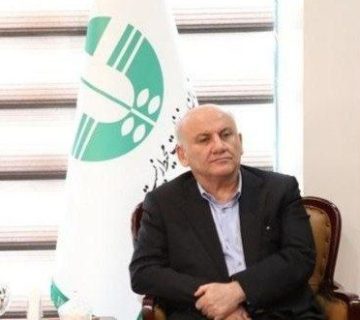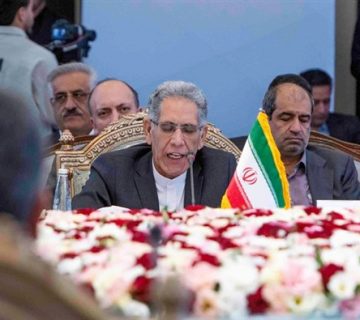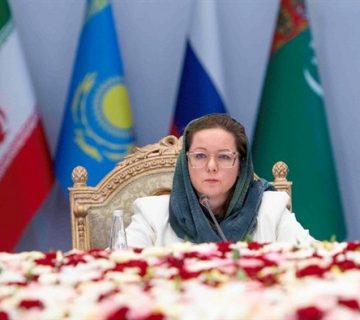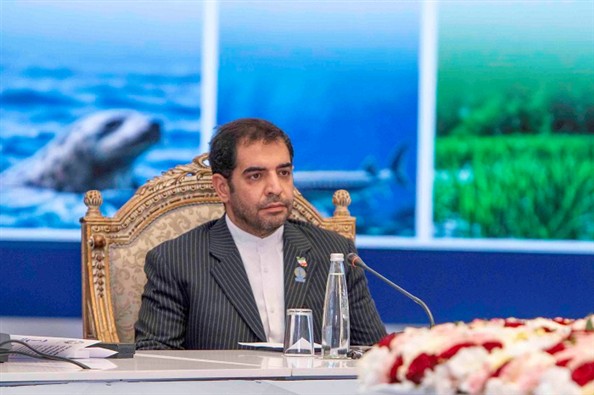
Head of the Center for International Affairs and Conventions at the Department of Environment and Executive Secretary of COP7:
The future of the Caspian Sea hinges on translating the political will of littoral states into concrete, measurable, and verifiable actions to protect the marine environment of this water body.
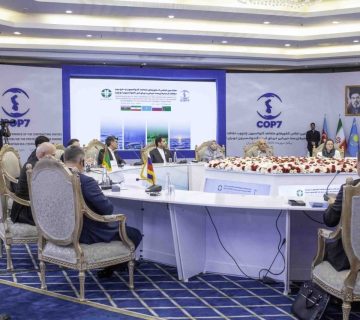
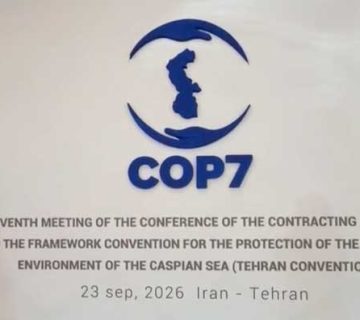
According to the Public Relations Office of the Department of Environment, Khorsand, speaking at the opening ceremony of the Seventh Meeting of the Conference of the Parties to the Framework Convention for the Protection of the Marine Environment of the Caspian Sea (COP7) in Tehran, welcomed high-level dignitaries and delegations from littoral states, stating:
“It is a source of profound pleasure and honor for the Islamic Republic of Iran to host this high-level gathering.”
Emphasizing that the Caspian Sea is far more than a shared body of water for its coastal nations, he added:
“The Caspian Sea is an integral part of the history, culture, economy, security, and daily lives of millions of people across the region, and its ecological destiny represents the shared fate of all littoral states.”
Pointing to the declining water level of the Caspian Sea as one of the most critical contemporary challenges, the Head of the Center for International Affairs and Conventions underscored:
“No littoral state can remain indifferent to the ongoing developments in this sea, particularly the phenomenon of falling water levels.”
Noting the approaching 24th anniversary of the adoption of the Tehran Convention, Khorsand remarked:
“This Convention is the product of a shared consensus among coastal nations. Safeguarding the Caspian marine environment demands multilateral cooperation, constructive dialogue, mutual accountability, and coordinated action across the entire region.”
He highlighted key interrelated and compounding challenges confronting the Caspian Sea, including climate change, water level drop, pollution from oil and gas operations, maritime transport, offshore pollutant discharges, biodiversity loss, strain on aquatic stocks, and growing threats to coastal and wetland ecosystems.
Khorsand emphasized:
“These challenges recognize no political borders, and their solutions cannot be confined to purely national measures. Therefore, multilateral cooperation among coastal nations and the delivery of shared, actionable solutions represent an unavoidable necessity.”
The Executive Secretary of COP7 characterized the session as a vital opportunity to reinforce existing frameworks and accelerate the implementation of the Tehran Convention’s protocols, stating:
“The Islamic Republic of Iran firmly believes that environmental cooperation in the Caspian Sea is not only an ecological necessity, but also an effective instrument for building trust, fostering dialogue, and consolidating regional partnerships.”
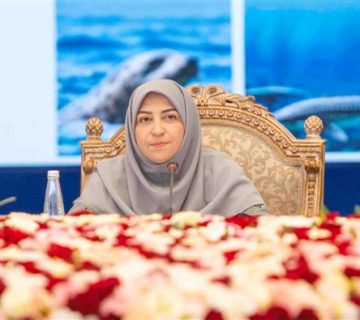
He extended his gratitude to the expert negotiating delegations of the littoral states and the organizing team, while commending the collaboration of the Ministry of Foreign Affairs, the Caspian Secretariat, colleagues at the Department of Environment, and the steadfast support of the Head of the Department of Environment, Dr. Shina Ansari.
Khorsand expressed hope that the outcomes of the summit will transcend political declarations and translate into clear, measurable, and traceable actions for the stewardship of the Caspian Sea.
Underlining the shared responsibility of littoral nations toward future generations, he concluded:
“Our collective understanding is a trust held for future generations. Our responsibility is not merely to protect the Caspian Sea in its present state, but to ensure that future generations can also benefit from its resources, biodiversity, and economic potential.”
Reiterating his welcome to the distinguished guests, the Head of the Center for International Affairs and Conventions expressed hope that COP7 will serve as an effective milestone toward the long-term protection of the Caspian marine environment and the enhancement of cooperation among coastal states.