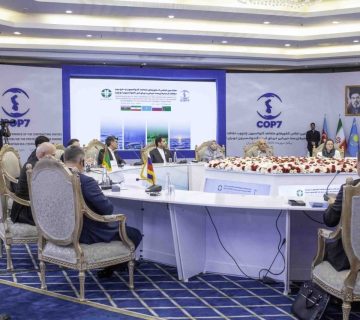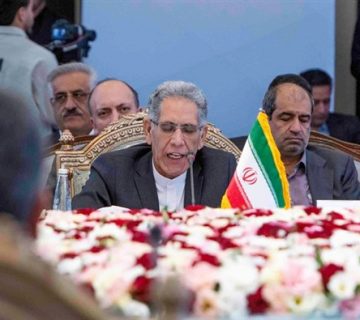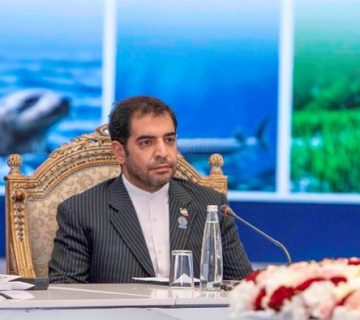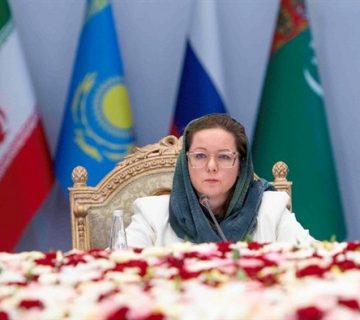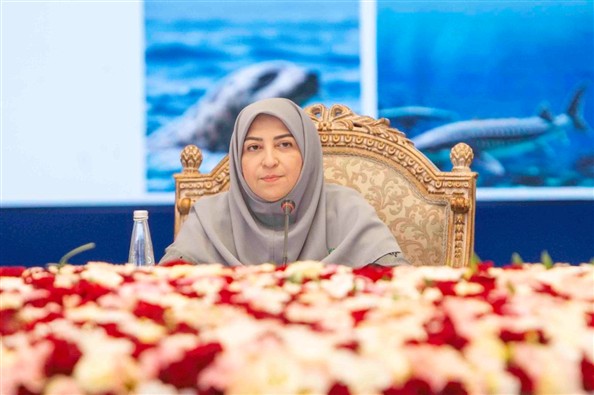
The Vice President and Head of the Department of Environment, emphasizing the necessity of strengthening regional cooperation for the protection of the Caspian Sea, stated: The fate of the Caspian cannot be divided by political borders, and the future of this body of water is the shared future of the five littoral states.
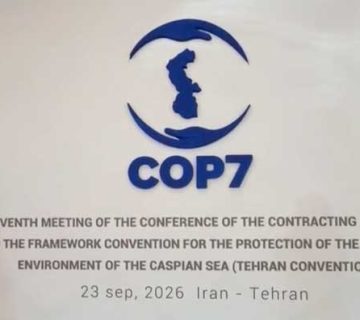
According to the Public Relations Office of the Department of Environment, Shina Ansari, speaking at the Seventh Conference of the Parties to the Framework Convention for the Protection of the Marine Environment of the Caspian Sea, expressed satisfaction with the hosting by the Islamic Republic of Iran and stated: “This summit has provided a valuable opportunity to renew the shared commitment of the littoral states toward the protection of the Caspian Sea and the strengthening of regional cooperation.”
Pointing to the strategic importance of the Caspian Sea, she added: “The Caspian is not merely a body of water, but a shared heritage, an interconnected ecosystem, and a vital asset for present and future generations. This unique expanse, with its valuable biodiversity, serves as the habitat for species such as the Caspian seal and is one of the world’s most critical breeding ecosystems for sturgeon. Millions of people in surrounding communities have tied their livelihoods and future to the health and sustainability of this sea.”
The Head of the Department of Environment stated: “Protecting the Caspian is a shared and transboundary responsibility. Land-based pollution, habitat destruction, pressure on biological resources, climate change, and water level fluctuations are not challenges that a single country can tackle alone.”
Referring to Iran’s experience regarding the environmental impacts of war and military conflicts, Ansari said: “The bitter experience of war and conflict reminds us that the environment is one of the silent victims of warfare. Contamination of soil and water, damage to habitats and environmental infrastructure, and increased pressure on natural resources can leave the scars of war for years, and even generations.”
She added: “Therefore, environmental protection and ecosystem resilience must be an integral part of our efforts toward peace, security, and sustainable development.”
The Vice President referenced the establishment of the Tehran Convention in 2003, stating: “By signing the Tehran Convention, the five littoral states—comprising the Republic of Azerbaijan, the Islamic Republic of Iran, the Republic of Kazakhstan, the Russian Federation, and Turkmenistan—laid the ground for a joint regional legal framework to protect the Caspian Sea. This step went beyond signing an international document; it represented the collective will of the five nations to cooperate in safeguarding a shared ecosystem.”
She continued: “For more than two decades, cooperation among littoral states has expanded in areas such as combating oil pollution, conserving biodiversity, and assessing transboundary environmental impacts; however, today we must take another step from commitment to action.”
Ansari emphasized: “We must move from fragmented information to shared data, from national monitoring to coordinated regional monitoring, and from crisis response to joint prevention and preparedness.”
Highlighting the central message of the conference, the Head of the Department of Environment remarked: “‘Five Countries, One Ecosystem, A Shared Future’ is not merely a symbolic phrase. ‘Five countries’ reflects our shared responsibility, ‘one ecosystem’ demonstrates the scientific reality of the Caspian Sea’s connectivity, and ‘a shared future’ reminds us of the duty we bear toward future generations.”
She stated: “Water currents, biological species, pollutants, and climate change do not adhere to political borders; therefore, the future of the Caspian cannot consist of five separate futures—the future of this sea is the shared future of all littoral nations.”
Underlining the role of science and technology in Caspian protection, Ansari said: “Today, more than ever, we need science and technology. Modern remote sensing technologies, satellite monitoring, smart environmental systems, ecological modeling, joint databases, and advanced analytical and forecasting tools can offer valuable opportunities for a deeper understanding of Caspian changes and a faster response to its threats.”
She added: “Another message of this summit is moving forward together and utilizing science and technology to preserve the Caspian Sea ecosystem and build a more sustainable tomorrow. This message must be translated into a practical approach.”
The Vice President stressed the necessity of enhancing scientific data exchange, joint monitoring systems, ecosystem status assessments, collective preparedness for pollution incidents, biodiversity conservation, and reducing the discharge of pollutants into the Caspian Sea.
Ansari also pointed to the entry into force of the Protocol on Environmental Impact Assessment in a Transboundary Context in November 2025, stating: “This step strengthens the cooperative framework of littoral states for evaluating the potential consequences of transboundary projects and offers a new opportunity to deepen environmental cooperation among the Caspian nations.”
In conclusion, the Head of the Department of Environment emphasized: “The Islamic Republic of Iran reaffirms its commitment to continuing constructive cooperation with littoral states and using the scientific, technical, and legal capacities of the Tehran Convention to protect this shared ecosystem. We must work with political will, shared responsibility, and reliance on science and technology to safeguard the Caspian Sea as a common heritage for present and future generations.”