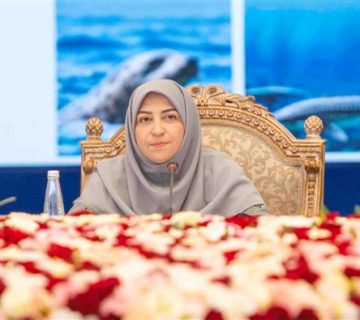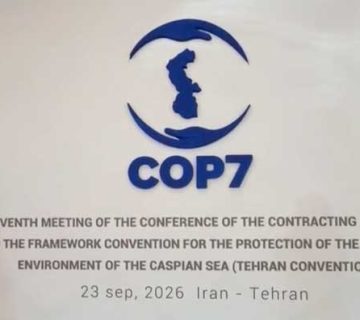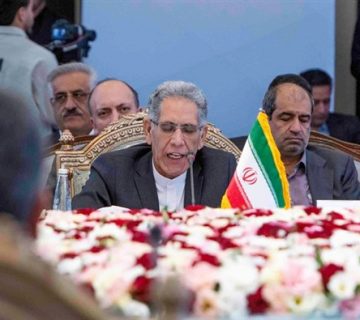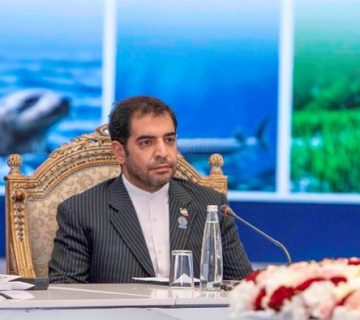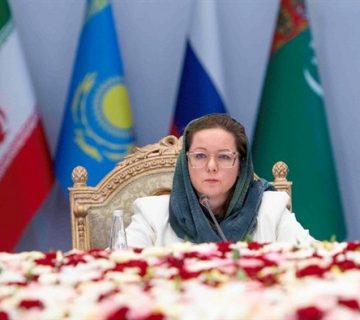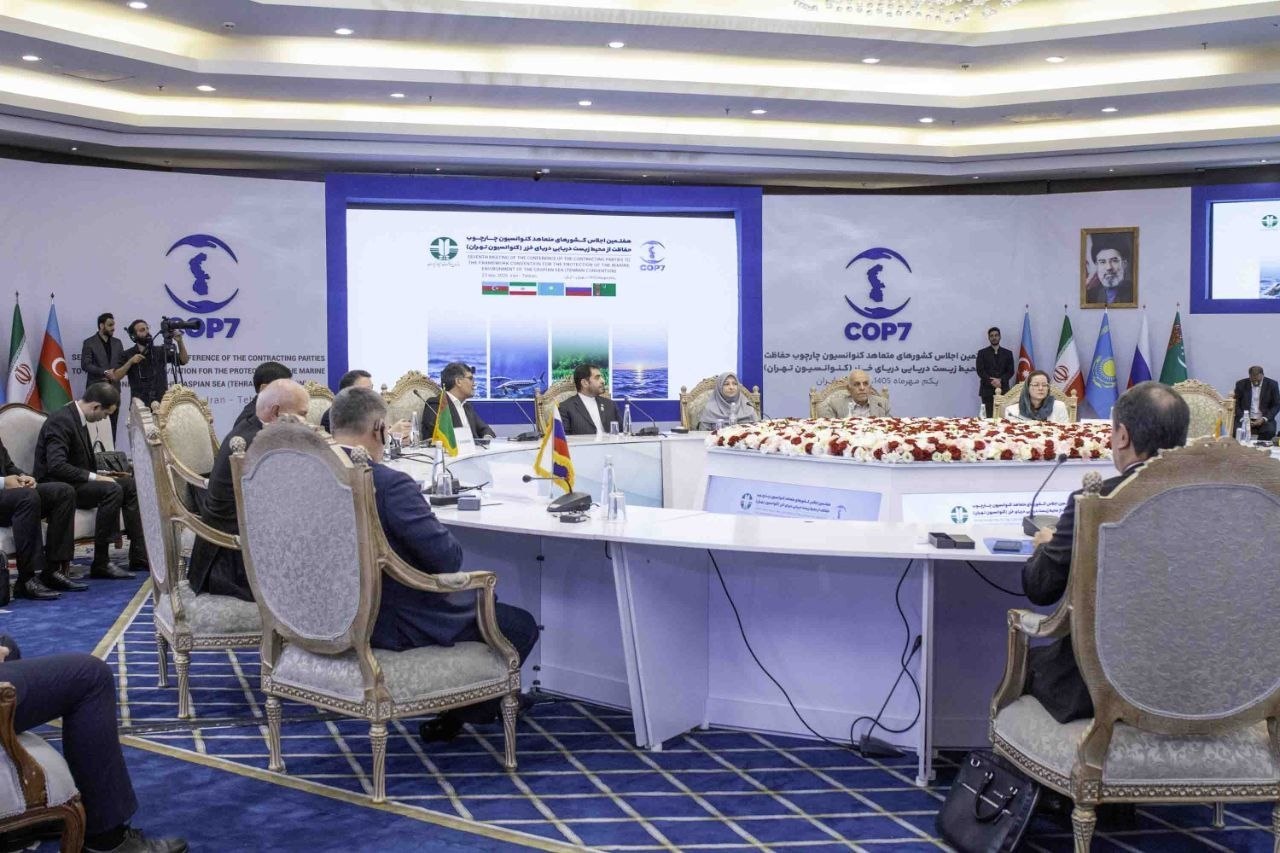
Participation in the 7th Conference of the Parties to the Tehran Convention provided an opportunity to review the process of regional cooperation regarding the protection of the Caspian Sea and to draw renewed attention to the requirements of the upcoming phase of this cooperation.
Today, the Caspian Sea faces a complex set of interconnected issues; changes in water level, the impacts of climate change, pollution from land-based and marine sources, marine litter, alterations and quality degradation of coastal and wetland habitats, and pressure on biodiversity can each be examined individually, but they are in fact components of a single, interconnected ecological system.
The transboundary nature of these issues requires that the response not be defined solely within the scope of independent national measures. Alongside the responsibility and sovereignty of each littoral state, cohesive, continuous regional cooperation grounded in shared knowledge must be strengthened.
Over the past two decades, the Tehran Convention has established an important legal and institutional framework for cooperation among the five littoral states. Today, the policy of the Islamic Republic of Iran and the Department of Environment remains anchored in strengthening regional cooperation, advancing scientific monitoring, protecting biodiversity, reducing pollution, and tackling the environmental challenges of the Caspian Sea in a coordinated manner.
However, the current phase of cooperation dictates that alongside the continuation of negotiations and the development of legal and technical frameworks, greater focus be directed toward translating regional commitments and decisions into operational action and measurable outcomes.
Regarding a major portion of Caspian issues, significant scientific and managerial knowledge exists today. Thus, a primary imperative for the coming period is completing the chain that connects regional decisions to national programs, national programs to action on the ground, and operational measures to measurable environmental results.
From the perspective of executive management in coastal provinces, this matter is of special significance. Although policy-making, international commitments, and primary coordination take shape at the level of national governments and institutions, a substantial part of fulfilling these commitments occurs in provinces, cities, rivers, wetlands, protected areas, and along the coastline.
Therefore, the systematic utilization of the capacity of coastal provinces and regions in executing national programs related to Convention commitments can help narrow the gap between policy-making and implementation, thereby enhancing program effectiveness.
The experience of Mazandaran illustrates the importance of this point well. Many of the issues discussed at the regional level have concrete manifests in this province: from the impacts of water level fluctuations on coastal and wetland ecosystems to pollution originating from watersheds, marine and plastic waste, the protection of Caspian-dependent species, and the imperative for economic activities and coastal communities to adapt to changing conditions.
Under such conditions, coastal provinces can be regarded not only as fields for executing programs, but also as part of the capacity for generating solutions, testing managerial approaches, and sharing experience.
Creating avenues for the exchange of executive experience among coastal areas on issues such as managing sensitive ecosystems, adapting to water level fluctuations, reducing land-based pollution, managing marine litter, protecting species, and fostering local community participation can help render regional cooperation more operational.
Another critical priority is strengthening the monitoring and data system. Effective management of the Caspian Sea is unattainable without continuous, reliable, and comparable data.
Harmonizing monitoring methodologies, developing shared indicators, leveraging modern technologies, remote sensing, and satellite data, alongside establishing a regular mechanism for information exchange and analysis, can help form a shared infrastructure for environmental decision-making.
In this context, the goal is not merely to increase data volume; rather, the key imperative is translating data into knowledge, knowledge into decisions, and decisions into effective action.
In the sphere of biodiversity, the necessity of regional cooperation is equally tangible. The Caspian seal is one of the clearest examples. The transboundary nature of this species’ habitat and movement necessitates that monitoring programs, mortality logging and investigation, scientific research, rescue and rehabilitation, and information exchange be pursued within a coordinated regional approach.
Strengthening coordinated programs to protect indicator species can serve as a concrete manifestation of converting Convention cooperation into field-level, evaluable action.
In tandem, sensitive coastal and wetland ecosystems possess high capacity for executing joint scientific and operational programs.
The Miankaleh Reserve and Gorgan Bay complex represents a vital example in the southern Caspian Sea, simultaneously affected by water level changes, climatic conditions, habitat transformations, and anthropogenic pressures. Under the guidance and endorsement of the Department of Environment, this area can offer suitable capacity for implementing pilot projects in coastal ecosystem adaptation, monitoring environmental changes, managing plastic waste, conserving biodiversity, and engaging local communities.
If designed scientifically and supported by an adequate monitoring and evaluation system, the outcomes of such pilot projects can benefit other coastal areas beyond addressing local challenges.
Another essential requirement is addressing sustainable financing for conservation and adaptation programs. Confronting long-term ecosystem shifts, climate change impacts, and biodiversity loss cannot be pursued relying solely on intermittent budgets and short-term projects.
Operational programs must be linked from the outset with appropriate financing mechanisms, and resource allocation should be tied, as far as possible, to achieving specific, measurable, and evaluable environmental outcomes.
Amidst these factors, local community participation represents a cornerstone of sustainable conservation. Executive experience demonstrates that conservation achieves greater durability when populations living around ecosystems are not merely subjects of regulatory mandates, but actively participate in conservation, monitoring, decision-making, and sharing in the benefits derived from protection.
Linking ecosystem conservation with the legitimate interests of local communities can serve as a primary pillar for enhancing the social and environmental resilience of the Caspian coasts.
The deliberations and directions articulated at COP7 demonstrated once again that protecting the Caspian requires a continuous bridge connecting regional cooperation, national policy-making, and executive capacity on the ground.
At this stage, evaluating progress must also become more outcome-oriented than in the past. While the number of meetings, documents, and projects retains its importance, the ultimate metric of success must be reflected in the condition of the ecosystem itself: in reducing pollutant loads, raising the quality of monitoring and data, boosting the resilience of wetlands and habitats, delivering more effective protection for indicator species, and enhancing the readiness of coastal regions and communities for upcoming changes.
Accordingly, in the post-COP7 period, a stronger focus on formulating measurable action plans, bolstering monitoring and data exchange systems, making targeted use of provincial and coastal capacities, expanding pilot projects in sensitive ecosystems, fortifying coordinated protection programs for indicator species, and securing sustainable financing mechanisms can significantly enhance the effectiveness of regional cooperation.
Encompassing a major portion of the southern Caspian coastline, along with a diverse array of wetlands, rivers, coastal habitats, managed areas, and existing scientific, executive, and social capacities, Mazandaran stands ready—within national policy frameworks and under the guidance of the Department of Environment—to play a more active role in implementing programs and projects related to regional commitments.
Ultimately, what matters from an executive management perspective is establishing a clear, evaluable chain extending from regional decisions to action on the ground, and from action on the ground to ecological outcomes.
Strengthening this chain can bridge more than two decades of dialogue, cooperation, and legal framework development in the Caspian Sea basin toward tangible results in the conservation and sustainable management of this invaluable ecosystem.
Protecting the Caspian Sea is not merely a sectoral environmental issue; it is directly linked to the future of the land, ecological security, the livelihoods of coastal communities, and the trajectory of sustainable regional development. Therefore, the upcoming phase of regional cooperation must succeed in transforming shared commitments into shared capacity, and shared capacity into effective, measurable action.