Head of the International Affairs and Conventions Center Assesses the 20-Year Track Record of the Tehran Convention as Positive; Emphasizes the Expansion of Environmental Cooperation Among Caspian Littoral States
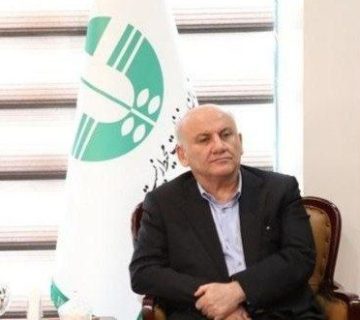
The Head of the Center for International Affairs and Conventions of the Department of Environment, while outlining the process of cooperation among Caspian littoral states within the framework of the Tehran Convention, assessed the 20-year performance of this convention as positive. He stated: “The Tehran Convention has provided a platform for implementing joint projects, exchanging information, and developing environmental cooperation among the Caspian littoral states.”
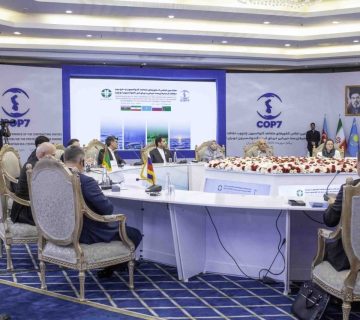
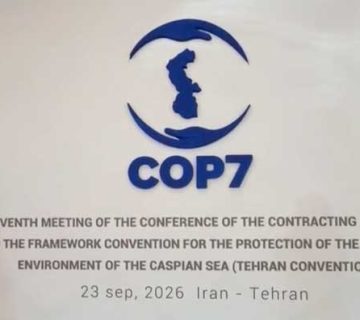
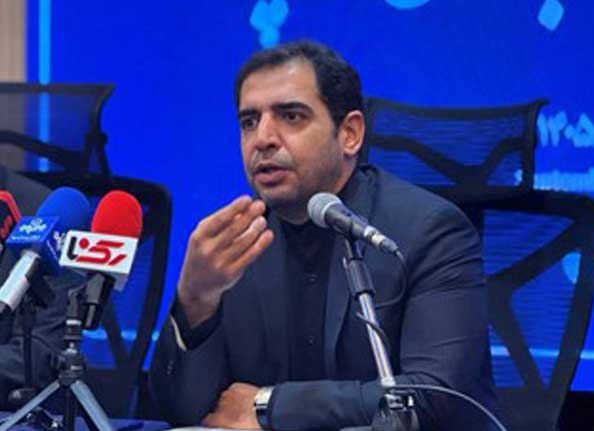
According to the Public Relations Office of the Department of Environment, Arman Khorsand, in the press conference for the 7th Meeting of the Conference of the Parties to the Tehran Convention (COP7), which was hosted by Tehran this morning, referred to the history of this convention and stated: “The Tehran Convention was signed in 2003 and entered into force in 2006, bringing the Caspian littoral states together within a common mechanism to protect this water body.”
He added: “This convention has four implementing protocols, three of which have been accepted by all members. These include the Aktau Protocol regarding regional preparedness, response, and cooperation in combating oil pollution incidents; the Moscow Protocol concerning pollution from land-based sources and activities; and the protocol on environmental impact assessment in a transboundary context.”
Khorsand continued: “The Ashgabat Protocol regarding the protection of the Caspian Sea’s biodiversity is also within this framework, which has not yet been fully accepted by all members. Additionally, negotiations on another protocol regarding monitoring and information exchange among member states are underway.”
Tehran Convention; A Platform for Implementing Joint Projects
Referring to the Tehran Convention’s cooperation with international environmental institutions, the Head of the Center for International Affairs and Conventions said: “One of the important capacities of this convention is providing a common ground for implementing environmental projects and attracting international financial resources.”
He added: “Currently, projects concerning combating plastic pollution in the Caspian Sea are being implemented, and other joint projects are being pursued with the participation of littoral states and the support of international institutions.”
Khorsand asserted: “Member states can cooperate with each other in the format of bilateral and multilateral projects, and the Tehran Convention has provided a framework for exchanging information, implementing joint projects, and engaging with funds and international institutions active in the environmental field.”
Noting the importance of exchanging environmental data in the region, he said: “Although countries have considerations regarding data sharing in many international forums, within the framework of the Tehran Convention, the status of information exchange is more favorable compared to other similar environmental cooperation platforms.”
The Water Issue; One of the Active Files of Regional Cooperation
Pointing to the increasing importance of the water issue in the international arena, Khorsand stated: “Climate change, drought, reduced precipitation, and the growing strategic importance of water resources have made water issues and water resource management one of the important axes of regional and international negotiations.”
He said: “The country’s water files, including the issue of wetlands shared with Iraq and border rivers in the north of the country, are active, and negotiations and consultations in this regard are continuing continuously.”
Emphasizing the complexity of water negotiations, the Head of the Center for International Affairs and Conventions stated: “Water files are completely open and active topics in the negotiations, but due to their complex and sensitive nature, not all details of the negotiations can be disclosed.”
He added: “Regarding border rivers in the north of the country, consultations are ongoing with countries in the region, and some outputs have been achieved, the results of which are expected to become more tangible in the future.”
The Necessity of Changing the Approach to Dealing with Climate Change Consequences
Referring to the effects of climate change on the countries of the region, Khorsand stated: “It is necessary for the countries’ approaches to the consequences of climate change to be reviewed, and urban planning and the way communities live should also be modified in accordance with climate changes and their effects.”
He continued: “Combating the last link in the chain of crises is necessary, but alongside mitigation measures, attention should also be paid to planning and preventive measures.”
Khorsand announced the pursuit of a joint project to investigate the effects of climate change in the three northern provinces of the country and said: “One of the issues considered in this project is examining the necessity of changing urban development patterns in accordance with new climatic conditions.”
The Necessity of Preventing Construction on Lands Resulting from Caspian Water Retreat
Regarding the consequences of the Caspian Sea’s water retreat, the Head of the Center for International Affairs and Conventions said: “If new lands emerge due to the retreat of the water, these areas should not be allowed to become arenas for commercial activities or construction.”
He added: “Areas that were previously underwater and are now emerging due to the retreat of the water should not be used for residential or commercial exploitation without adhering to legal and environmental considerations.”
Hosting COP7; A Manifestation of Iran’s Environmental Diplomacy Capacity
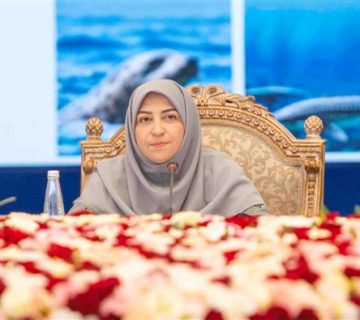
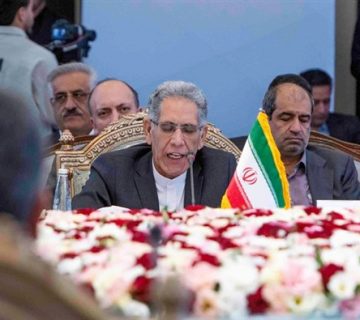
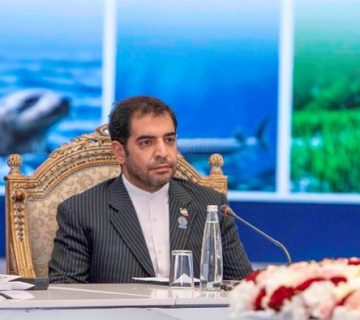
In another part of his speech, Khorsand referred to the hosting of the 7th Tehran Convention meeting in Tehran and said: “Holding this summit after the pause that occurred demonstrates the country’s diplomatic capacity in the field of environment.”
He added: “Despite the existing threats and pressures, the member states attended in Tehran, and this summit was held and reached agreed-upon results.”
The Head of the Center for International Affairs and Conventions, stating that international cooperation has a complex nature, said: “Every country tries to protect its national rights and interests, and at the same time, achieving an agreement and joint cooperation requires dialogue and the continuation of negotiations.”
He concluded by noting the necessity of more practical implementation of the Tehran Convention’s protocols, saying: “In some parts of the protocols, including the issue of oil pollution and the effects of climate change on the Caspian Sea’s water level, there is more capacity for practical measures and achieving specific outputs, and the environmental cooperation of the Caspian littoral states is expanding and accelerating.”