Deputy Head of Human Environment: Sea-Based Development in the Caspian Must Be Sustainable and Adaptive to Water Level Decline
Coinciding with the 7th Meeting of the Conference of the Parties (COP7) to the Tehran Convention, the Deputy Head of Human Environment at the Department of Environment emphasized that utilizing the economic and developmental capacities of the Caspian Sea must occur simultaneously with controlling pollutant sources, respecting ecological capacity, and adapting coastal infrastructure and settlements to the trend of the sea’s water level decline.
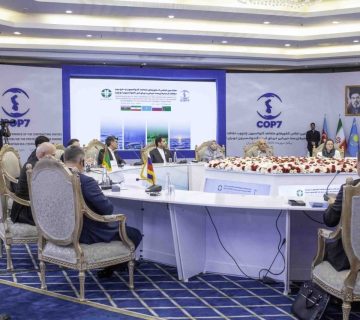
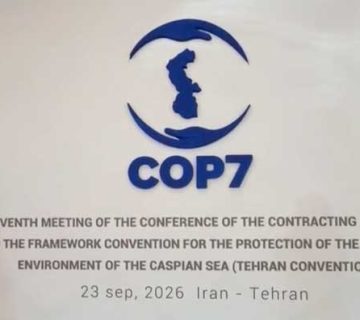
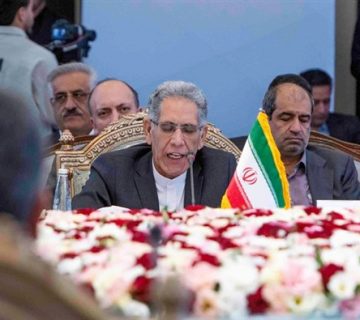
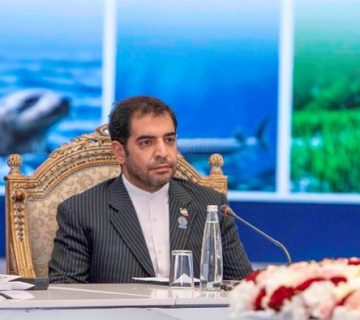
According to the Public Relations Office of the Department of Environment, Saeed Mahmoudi, Deputy Head of Human Environment, stated that the COP7 meeting is a crucial opportunity for the Caspian littoral states to move beyond merely stating challenges and commitments toward joint, specific, and measurable actions for the protection of the Caspian Sea.
He added: “The Caspian Sea possesses significant potential for the development of shipping, trade, energy, fisheries, tourism, and other sea-based economic activities. However, developing these capacities will only be sustainable if environmental considerations are integrated into the design and implementation of development projects from the outset. The development of port, industrial, oil and gas, urban, and coastal infrastructure, alongside economic opportunities, can increase pressure on the environment of this water body.”
Stating that a significant portion of the Caspian Sea’s pollution originates from land-based sources, Mahmoudi noted: “Municipal and industrial wastewater, agricultural runoff, waste and plastics, oil pollutants, and activities within the catchment area are the most important sources of pressure on the Caspian’s environmental quality. Therefore, protecting the Caspian Sea must begin from the catchment area; the development of wastewater collection and treatment networks, controlling industrial outflows, waste management, reducing pollutant production, and using clean technologies must be a serious priority for the littoral states. This approach aligns with the provisions of the Moscow Protocol concerning the protection of the Caspian Sea against pollution from land-based sources and activities.”
He emphasized: “Pollution prevention must be part of development planning, not an action considered only after damage has occurred. Accordingly, large-scale development projects on the Caspian coast must be evaluated prior to implementation in terms of the region’s ecological capacity, pollution production levels, waste and wastewater management methods, potential transboundary consequences, and resilience to shoreline changes.”
The Deputy Head of Human Environment identified the decline in the Caspian Sea’s water level as one of the most significant common issues among the littoral states, stating: “The decline in the Caspian’s water level is not merely a natural or environmental issue or just a retreating shoreline; it has become a serious human environment, economic, and developmental issue.”
He added: “The retreat of the water can affect the operations of ports and coastal facilities, the access of fishing communities to the sea, coastal tourism, infrastructure, economic activities, and the livelihoods of local communities, while simultaneously causing changes or the loss of certain sensitive coastal habitats.”
He asserted: “In addition to investigating the causes and trends of the Caspian’s water level decline, regional countries must prioritize increasing the resilience of coastal cities and settlements, assessing the vulnerability of ports and facilities, and incorporating water level change scenarios into long-term investments. Recent regional dialogues under the Tehran Convention have also identified water level decline and its consequences on habitats, fisheries, and coastal infrastructure as common challenges requiring a coordinated and scientific response.”
Referring to the capacity of the Tehran Convention and its protocols, he said: “Now, more than ever, we need joint monitoring, exchange of environmental data, identification of pollution hotspots, determination of joint actions to reduce pollution loads, and effective implementation of existing commitments.”
He concluded: “The Caspian Sea is a shared ecosystem; its pollution knows no political borders, and the consequences of its water level decline will not be limited to one country. Therefore, protecting the Caspian requires common science, common responsibility, and the common action of the five littoral states. Development in the Caspian must be in harmony with the Caspian and commensurate with its capacities and changes. A sustainable sea-based economy is only possible alongside a healthy sea, resilient coasts, and communities enjoying environmental security.”